
Beyond Generative AI: How Large Quantitative Models Are Transforming Scientific Discovery
Scientific discovery faces a major bottleneck: while generative AI has transformed information processing, it has not yet unlocked comparable acceleration in understanding the physical world. Traditional computational chemistry and materials modeling remain too slow, expensive, and limited to power large-scale innovation. SandboxAQ tackled this challenge by developing Large Quantitative Models (LQMs) — a new class of AI models that merge machine learning, physics-based simulation, and quantum-inspired algorithms to model molecular and material interactions at unprecedented speed and accuracy. Partnering with institutions such as UCSF, The Michael J. Fox Foundation, and NVIDIA, LQMs have expanded discovery search spaces by more than 20 times, cut experimental timelines from a year to a month, and reduced lab costs over 30-fold. These results demonstrate how combining generative intelligence with quantitative modeling is transforming R&D productivity across biopharma, materials, and energy. Attendees will learn how LQMs extend the power of AI beyond text into the realm of atoms, and gain practical insights into leading AI-driven transformation in data-intensive, high-stakes industries.
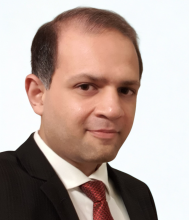
Rahul Gupta is a seasoned technology product leader specializing in AI/ML model, platform and application development with deep experience building and scaling cloud-native software from early vision through enterprise adoption. As Vice President of Product at SandboxAQ, he currently leads the development and commercialization of category leading Large Quantitative Models (LQMs) leveraging AI and scientific approaches grounded in physics, chemistry and biology. These multi-scale LQMs serve mission-critical applications in drug discovery, materials research, battery design and beyond. Prior to SandboxAQ, Rahul spent nearly a decade at Amazon where he led Product Management for a number of AWS AI/ML services spanning Generative AI, Computer Vision and Natural Language Processing. He holds an MBA from Dartmouth College and a Bachelor's degree in Electrical and Computer Engineering from Worcester Polytechnic Institute.